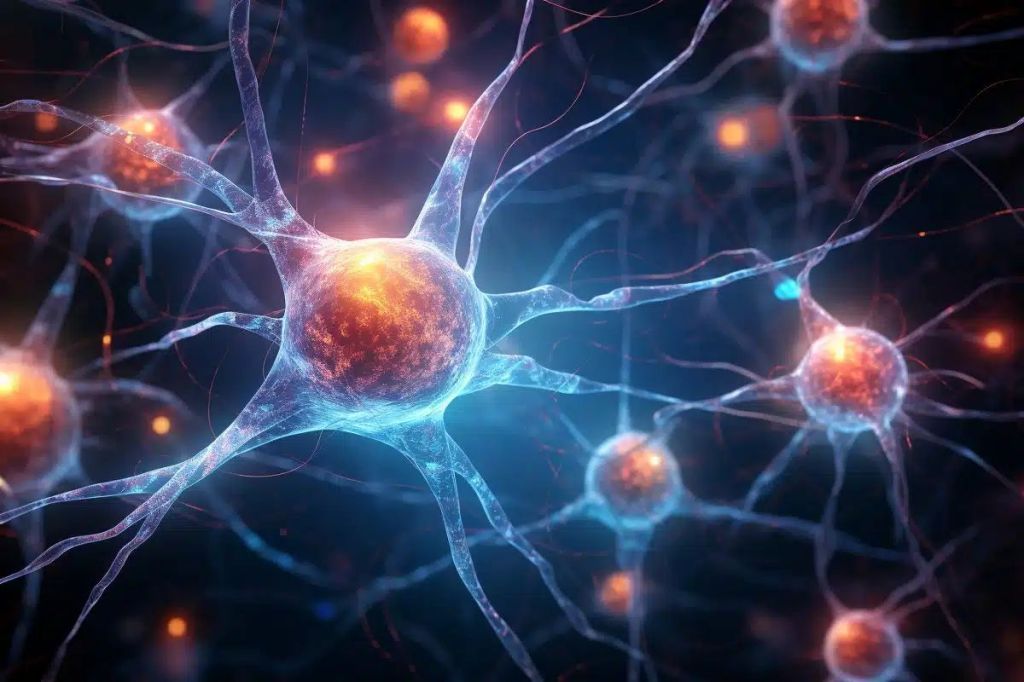
Our brains are wired to adapt. Every thought, action, and behavior we repeat strengthens the neural pathways that make up who we are and how we function. When we talk about rewiring the brain, we’re talking about changing these pathways—literally reshaping how neurons in our brains connect and communicate.
Neurons, Synapses, and the Wiring of the Brain
Neurons are the brain’s messengers. They communicate with each other through tiny connections called synapses, transmitting information that shapes our habits, thoughts, and behaviors. When we repeat an action or behavior, our brain strengthens the synapses related to that activity—a process called synaptogenesis. Imagine it like adding wires to a circuit; the more wires, the stronger the connection.
When we’re learning something new, or forming a new habit, the brain goes through a period of synaptic blooming—creating lots of new connections, almost like laying down a maze of cables. But not all of these connections stick around. The brain, being incredibly efficient, eliminates the ones we don’t use, a process called synaptic pruning. This is where habits become crucial: the pathways we use often are strengthened, while the unused ones wither away.
Think of it like wiring in a house. A small habit is like a thin wire, capable of carrying a little bit of electricity. But as you repeat that habit, the wire gets replaced with a thicker one, capable of carrying more power. This is why habits feel easier over time—your brain has literally upgraded its wiring to support that behavior. The same principle applies when breaking bad habits. If you stop using a pathway, it begins to degrade, like a wire corroding over time.
The Role of Habits in Rewiring the Brain
Changing a habit is like rewiring an electrical system. If you want a certain behavior to become automatic, you need to strengthen the pathway by practicing it consistently. Conversely, breaking a bad habit means stopping the use of the pathway so it weakens and eventually disappears. Research shows that it takes about 21 to 66 days to form a new habit, but breaking a habit can take even longer—especially if it’s deeply ingrained. The process depends on synaptic pruning, which happens when the brain eliminates unused synapses.
The beauty of this process is that it’s not about erasing the bad habit entirely; it’s about replacing it with a better one. The brain never leaves a pathway empty—it’s always looking to rewire.
My Journey: Rewiring a Brain That Craved Alcohol
Ten years ago, I had to rewire my brain completely. I was an alcoholic. My brain didn’t just crave alcohol—it was wired for it. The pathways were deeply ingrained, and every day without a drink felt like fighting against the current.
When I decided to get sober, I realized it wasn’t just about willpower. I had to change my habits—rewire my brain. I did this through mindfulness, practicing gratitude, and working the 12-step program. These practices became my new habits, slowly replacing the old pathways with new, healthier ones.
The process wasn’t quick or easy. At first, the craving for alcohol was overwhelming, but as I consistently practiced new habits, the old pathways began to wither. My brain created stronger, healthier connections—ones that didn’t include alcohol. Over time, I noticed I didn’t crave alcohol anymore. That craving, that pull, was gone.
Today, I’ve been sober for 10 years. My brain, once wired for addiction, is now wired for gratitude, mindfulness, and clarity. It took effort and time, but it worked. I literally had to work a program to reprogram my brain—and I am living proof that rewiring the brain is possible.
 GPTs-and-Me