The Apprentice: Where Reality TV Met Political Reality

It’s fascinating how a reality TV show can reshape not just the lives of its contestants, but also the course of a nation. The Apprentice, which aired from 2004 to 2017, wasn’t just a hit television series—it was a training ground for Donald Trump’s foray into the world of politics. And what better producer to shape this than Mark Burnett, the mastermind behind some of the most compelling reality shows on television?

Mark Burnett’s formula for entertainment is simple yet powerful: high-stakes competition, memorable characters, and a narrative arc that hooks viewers from start to finish. From Survivor to The Voice to Shark Tank, Burnett knew how to keep audiences glued to their screens. And with The Apprentice, he found the perfect leading man in Donald Trump.

On The Apprentice, Trump was the epitome of success—a business mogul who played the part of a no-nonsense, decisive leader. Week after week, millions tuned in to watch him judge aspiring entrepreneurs, handing out praise and criticism with the same level of drama that you’d expect in a well-scripted soap opera. But unlike the contestants, who left the boardroom at the end of each episode, Trump’s role on the show would follow him long after the cameras stopped rolling.

So, what did Trump learn from Burnett? Quite a bit, it seems.

First, Trump mastered the art of branding. The Apprentice wasn’t just a show; it was a stage where Trump’s public persona was meticulously crafted and reinforced. The image of the tough, successful businessman who could make or break someone’s career with a single word—“You’re fired!”—became central to how the public viewed him. This image, carefully curated by Burnett, became the foundation of Trump’s political brand.

Then, there’s the lesson of narrative control. Reality TV, as Burnett knows all too well, is less about documenting real life and more about shaping a story that keeps viewers engaged. Trump learned how to control the narrative, both on-screen and off. In politics, this translated into an ability to dominate the news cycle, framing issues in a way that kept the spotlight squarely on him. Whether it was through provocative statements or polarizing actions, Trump ensured that he was always the story.

Conflict and drama are also cornerstones of Burnett’s reality TV formula. On The Apprentice, these elements were what kept audiences coming back each week, eager to see who would rise and who would fall. Trump carried this understanding into his political career, using conflict to energize his base and keep the media—and the public—focused on him. Whether he was sparring with political opponents, foreign leaders, or the media itself, Trump knew that conflict was a powerful tool for maintaining relevance.

And let’s not forget the power of audience engagement. Burnett’s shows often include interactive elements, like audience voting, which create a sense of involvement and investment. Trump’s use of social media, particularly Twitter, was an extension of this strategy. By speaking directly to his followers, bypassing traditional media filters, he created a direct line of communication that kept his base engaged and mobilized.

Finally, there’s the high-stakes presentation. On The Apprentice, every task, every decision felt like it carried the weight of the world. This sense of urgency and importance was something Trump brought to his political rhetoric. He often framed issues as existential crises, with him as the only person capable of resolving them. This narrative not only rallied his supporters but also heightened the sense of drama and tension that defined his presidency.

In many ways, Donald Trump’s political career can be seen as an extension of the lessons he learned from Mark Burnett and The Apprentice. The show wasn’t just a platform for Trump; it was a blueprint for how to navigate the world of politics with the same flair, drama, and control that makes reality TV so addictive. And just like in reality TV, where the lines between real life and scripted drama often blur, Trump’s journey from reality star to President blurred the lines between entertainment and governance in a way that the world had never seen before.

The mask of the actor, the mask of the politician—they’re not so different after all. And in the end, it’s the narrative you craft, the image you project, that shapes your legacy. Trump understood this, perhaps better than anyone.

Practicing Forgiveness

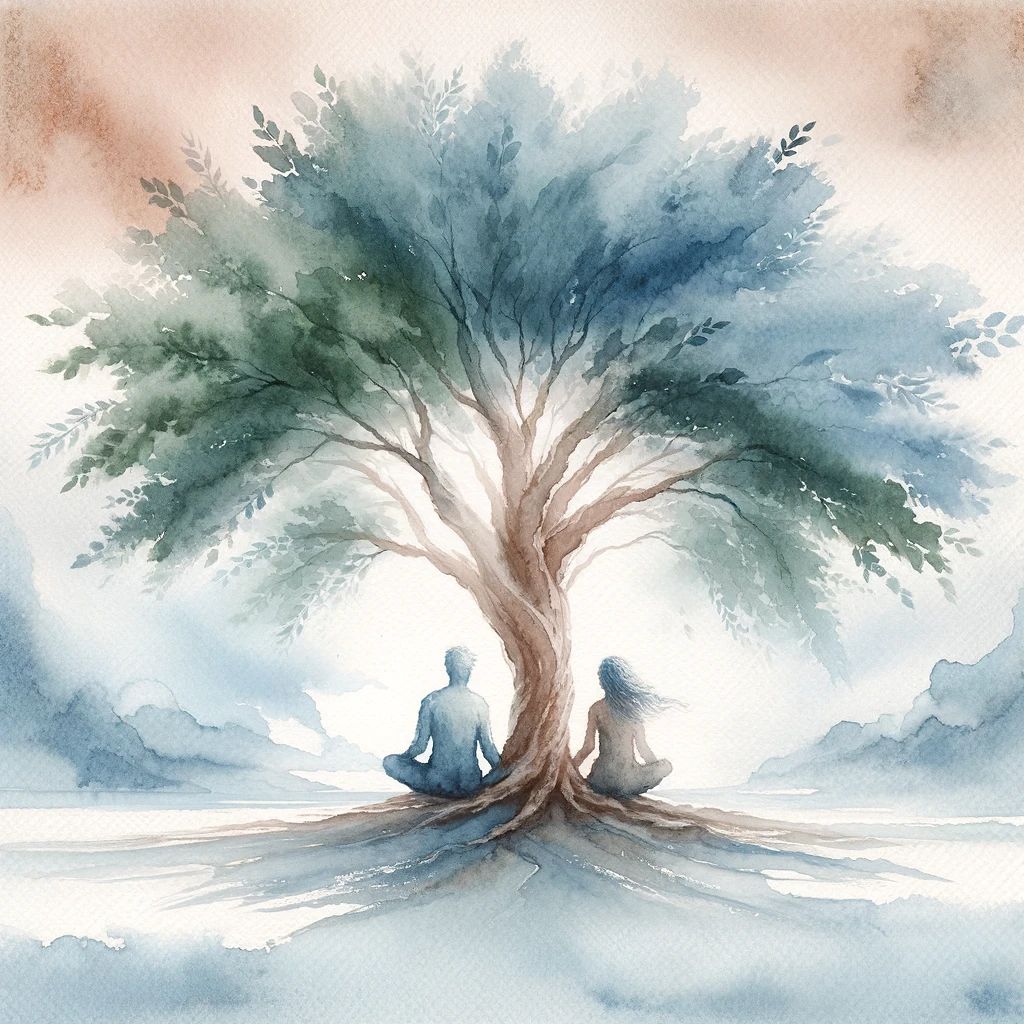
Image created by DALL-E, 5.17.24

“Then Peter came to Jesus and asked, ‘Lord, how many times shall I forgive my brother or sister who sins against me? Up to seven times?’ Jesus answered, ‘I tell you, not seven times, but seventy-seven times.'” – Matthew 18:21-22

The Importance of Forgiveness

In the context of Matthew 18, where Peter poses his question about forgiveness, the setting is part of Jesus’ ongoing teaching to His disciples. Prior to Peter’s inquiry, Jesus had been teaching them about the importance of humility, how to deal with sin in the community, and the parable of the lost sheep, which emphasizes God’s concern for the wayward and the value of every individual.

Peter’s question about forgiveness likely stems from this broader discussion of community relations and dealing with sin among believers. The discourse would have naturally led Peter to wonder about the limits of forgiveness, especially in a close-knit community where interpersonal offenses could frequently occur. His query reflects a practical concern about how often one should extend forgiveness to someone who repeatedly sins against them.

Parable of the Unforgiving Servant

Jesus responds with the parable of the unforgiving servant, which immediately follows His advice to forgive “seventy-seven times,” further emphasizing the necessity of unlimited forgiveness.

Jesus told the Parable of the Unforgiving Servant. In this parable, a king wanted to settle accounts with his servant. One servant owed him an enormous sum, equivalent to millions of dollars today, and couldn’t pay. The king ordered that the servant, along with his family and possessions, be sold to repay the debt. The servant begged for mercy, and the king, moved by compassion, forgave the debt entirely.

However, this same servant went out and found a fellow servant who owed him a much smaller amount. Instead of showing the same mercy he had received, he demanded immediate payment and had the fellow servant thrown into prison. When the other servants saw what had happened, they were greatly distressed and told the king. The king called the unforgiving servant in and rebuked him, saying, “Shouldn’t you have had mercy on your fellow servant just as I had on you?” In anger, the king handed him over to the jailers to be tortured until he could pay back all he owed.

Jesus used this parable to show the importance of extending the same forgiveness we receive from God to others. This teaching illustrates that forgiveness should be extended generously, mirroring God’s forgiveness towards humanity, and highlights the consequences of failing to forgive others from the heart. This exchange between Peter and Jesus underscores a key aspect of Christian doctrine, emphasizing forgiveness as a fundamental expectation within the community, reflecting God’s infinite mercy and grace.

And forgive us of our trespasses, as we forgive those who trespass against us.

Lord’s Prayer

Forgiveness, in its essence, is a resurrection. It is a journey from the bondage of anger and resentment to the freedom of peace and understanding. It is the conscious choice to move beyond the pain inflicted by others or by our own mistakes. Without forgiveness, we are shackled to the past, unable to embrace the present or future fully. It is the key to healing, to mending the invisible scars that weigh down our spirits. By forgiving, we acknowledge our shared humanity, recognizing that we all falter and that grace is a gift we both give and receive.

Steps to Forgive Yourself and Others

Forgiving is an intentional act, a process that begins with a decision and unfolds with effort and patience. Here are steps to guide you on this path:

  1. Acknowledge the Hurt: Begin by acknowledging the pain. Whether it’s something someone else did to you or a mistake you made yourself, it’s important to confront it honestly. Name the hurt, understand its impact on you, and allow yourself to feel the emotions it brings up.
  2. Release the Grudge: Let go of the desire for revenge or retribution. This doesn’t mean you condone the behavior, but you choose not to let it control your emotions and actions. Say to yourself, “I release this pain. I release this grudge.”
  3. Empathize: Try to see the situation from the other person’s perspective. Understanding their motives or circumstances can help in softening your heart. This step is crucial when forgiving yourself as well—recognize the pressures and challenges you were under at the time.
  4. Decide to Forgive: Make the conscious decision to forgive. This might be the hardest part, but it’s also the most liberating. Affirm your choice to let go and move on.
  5. Take Action: Sometimes forgiveness requires action. It might be writing a letter (whether you send it or not), having a conversation, or simply performing a ritual of release. Do whatever feels right to you to symbolize your commitment to forgiveness.

How Forgiveness Heals

Forgiveness is a powerful healer. When we let go of anger and resentment, we make room for positive emotions and experiences. The act of forgiving releases us from the chains of the past, allowing us to live more fully in the present. It reduces stress, improves our mental health, and fosters better relationships. Forgiveness is not just an emotional release but a physical one, too. Studies have shown that people who forgive experience lower blood pressure, reduced risk of heart disease, and stronger immune systems. In essence, forgiveness is a holistic healer, mending our hearts, minds, and bodies.

Letting Go of Grudges

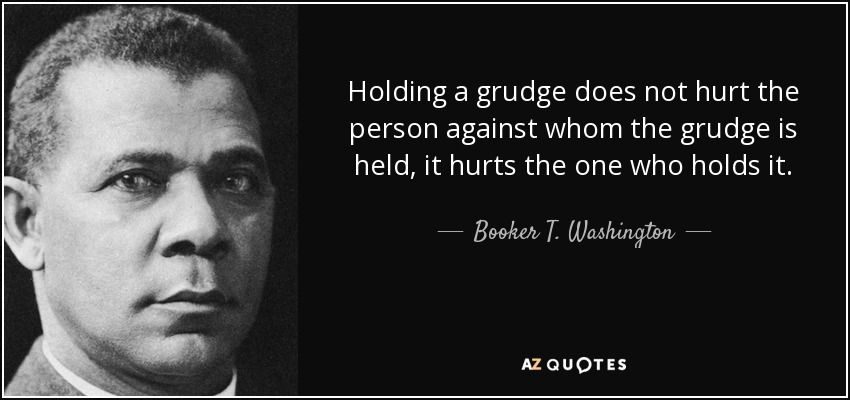
Grudges are like heavy stones we carry around, weighing us down and draining our energy. Letting go of a grudge is a gift to ourselves. It means freeing ourselves from the negative hold the past has on us. To let go, start by recognizing the grudge’s impact on your life. Ask yourself if holding onto it is worth the emotional and physical toll it takes.

Next, choose to release it. This is an active choice, a decision to no longer allow the past to dictate your present. Engage in practices that help you let go, such as journaling, meditation, or speaking with a trusted friend or therapist. Visualize the grudge as a physical object, and imagine yourself setting it down and walking away from it.

In the end, letting go of grudges opens the door to peace and joy. It is a declaration that we will not be defined by our pain but by our capacity to heal and to love. It’s a journey worth taking, one step at a time.

The Soul of Friendship: Exploring Aristotle’s Timeless Wisdom

Image created by DALL-E,  4.18.24

“What is a friend? A single soul dwelling in two bodies.”

Aristotle

This profound observation offers more than a touching sentiment; it delves into the essence of what it means to be connected to another human being on a profound level. But to truly appreciate the gravity of this statement, we must first understand Aristotle’s concept of the soul.

Aristotle and the Soul

Aristotle saw the soul as the essence of a living being, the cause and source of its life. The soul, according to him, is what gives a body its life force, its purpose. It is not merely a spirit housed within us but an integral part of our being that defines our capacity to function, reason, and connect.

A Single Soul in Two Bodies

With this understanding, when Aristotle speaks of friends as sharing one soul, he invites us to consider friendship as the deepest possible connection between two people. It’s more than shared interests or mutual benefits; it’s a profound meeting of minds and spirits, where two individuals resonate on such a fundamental level that their souls seem intertwined. In this sacred space, friends mirror each other’s virtues and offer a reflection of their best selves.

The Bonding of Souls

Friendship, in its truest form, acts as a catalyst for this soulful bonding. It helps us grow, challenges us, and supports us in our pursuit of a good and meaningful life. Through the joys and trials shared, friends can not only understand one another’s intents and desires but often anticipate them, acting as extensions of each other’s will and purpose.

The Healing Power of Friendship

When our bodies grow weary, when the trials of life make us falter, friends become our sanctuary. They offer strength when ours is waning and light when our path grows dark. This isn’t just poetic language; it’s a reality backed by science.

Empirical Evidence on Friendship and Health:

  1. Study on Social Relationships and Mortality Risk (2010): A meta-analysis published in PLOS Medicine concluded that strong social relationships enhance our survival odds by 50%, an effect on mortality risk roughly comparable to smoking cessation.
  2. Study on Social Connections and Physiological Functioning: Research indicates that individuals with strong social ties have better immune function and are less likely to suffer from depression and anxiety. Friendship literally helps our bodies manage stress and recover from illness faster.

Cultivating the Art of Friendship

Being a good friend is both a gift and a skill, one that nurtures not only another’s soul but our own. Here are five ways to cultivate the art of true friendship:

  1. Be Present: More than just physically being there, true presence means offering your undivided attention when your friends speak their minds and share their hearts.
  2. Listen Actively: Listening is the foundation of understanding and empathy in any relationship. Listen not just to respond but to understand.
  3. Offer Honest, Kind Feedback: A true friend does not shy away from the truth. They deliver honesty with kindness and integrity, helping friends see themselves and their situations more clearly.
  4. Support Their Growth: Encourage your friends to pursue their passions and personal growth endeavors. Celebrate their successes and be there to lift them from their failures.
  5. Maintain Trust: Be dependable, keep your promises, and safeguard the confidences shared with you. Trust is the bedrock of any lasting friendship.

Conclusion: Embracing Aristotle’s Vision

Aristotle’s view of friendship as a shared soul is not only a philosophical ideal but a practical guide to living well. By nurturing deep, soulful connections with others, we not only enrich our lives but also engage in a mutual exchange of virtues that elevates our existence. In the camaraderie of true friends, we find one of life’s greatest supports and joys. Let us then strive to be worthy of such profound companionship, for in the mirror of a friend, we see our true selves reflected.

Echoes of an Empty Tomb: The Morning Light Reveals More Than Just Dawn

“Jesus said to her, ‘Mary.’ She turned and said to him in Aramaic, ‘Rabboni!’ (which means Teacher).” – John 20:16, New International Version (NIV)

Jesus looking at Mary created by DALL-E, 3.31.24

It was a crisp, serene morning, the kind where you can almost hear the world waking up around you. I had planned something a little different for our Easter sunrise service that year at the old white-framed country church that had stood as a beacon of hope and community for generations. The chairs were arranged outside on the lawn, facing the rising sun, with the cemetery tombstones casting long, silent shadows behind us. It was a poignant setting meant to remind us all of the cycles of life and death, of endings and beginnings.

As the first light of dawn started to break across the sky, a sense of anticipation filled the air. But there was no sign of me. I had decided to wait behind the church, out of sight, leaving my congregation to wonder, to whisper, to feel a stir of restlessness. “Where’s Scott?” Ms. Janie, the matriarch of our country church, asked aloud. After what must have felt like an eternity to them but was only five minutes, I stepped into view.

“How does it feel to be going to a church service and find an empty pulpit?” I asked them, letting my words hang in the crisp morning air. “Surprised? Anxious, confused?” That was exactly what Mary Magdalene felt upon finding the empty tomb. She had gone to pay her last respects to a beloved friend, only to be met with an inexplicable void. Initially, she thought his body had been stolen.

Later, as Mary stood outside the tomb, distraught, Jesus himself approached her, yet in her turmoil, she did not recognize him. It was only when he spoke her name, “Mary,” that her eyes were opened, and she truly saw Him. It was a profoundly personal moment, a testament to the intimate relationship Jesus seeks with each of us, calling us by name into His resurrection life.

This story, this pivotal moment in our faith, underscores several profound truths:

  1. The Power of Recognition: Just as Mary’s recognition of Jesus transformed her confusion and despair into joy and purpose, so too can our recognition of Jesus in our lives transform us. It’s in the personal, intimate moments of our faith journey that we truly encounter Christ.
  2. Resurrection as a Personal Experience: The resurrection isn’t just a historical event; it’s an ongoing, living reality that we’re invited to participate in. Jesus calls each of us by name, inviting us into a new life that transcends the physical and touches the eternal.
  3. Hope in the Face of Despair: The empty tomb initially symbolized loss and confusion for Mary. Yet, it ultimately became the greatest symbol of hope and victory over death. In our darkest moments, when all seems lost, the resurrection reminds us that God brings life out of death, hope out of despair.

That Easter morning, as the sun rose and cast its light over us, the empty tomb and the empty pulpit both served as powerful reminders. They reminded us that sometimes, it’s through absence that we come to understand presence. It’s through seeking and questioning that we find truth. And it’s through death that we find life—eternal, abundant, and free. Let us then, like Mary, hear Christ calling our names, turning our mourning into dancing, and our sorrow into joy.

The Essence of Authenticity: A Legacy of Truth

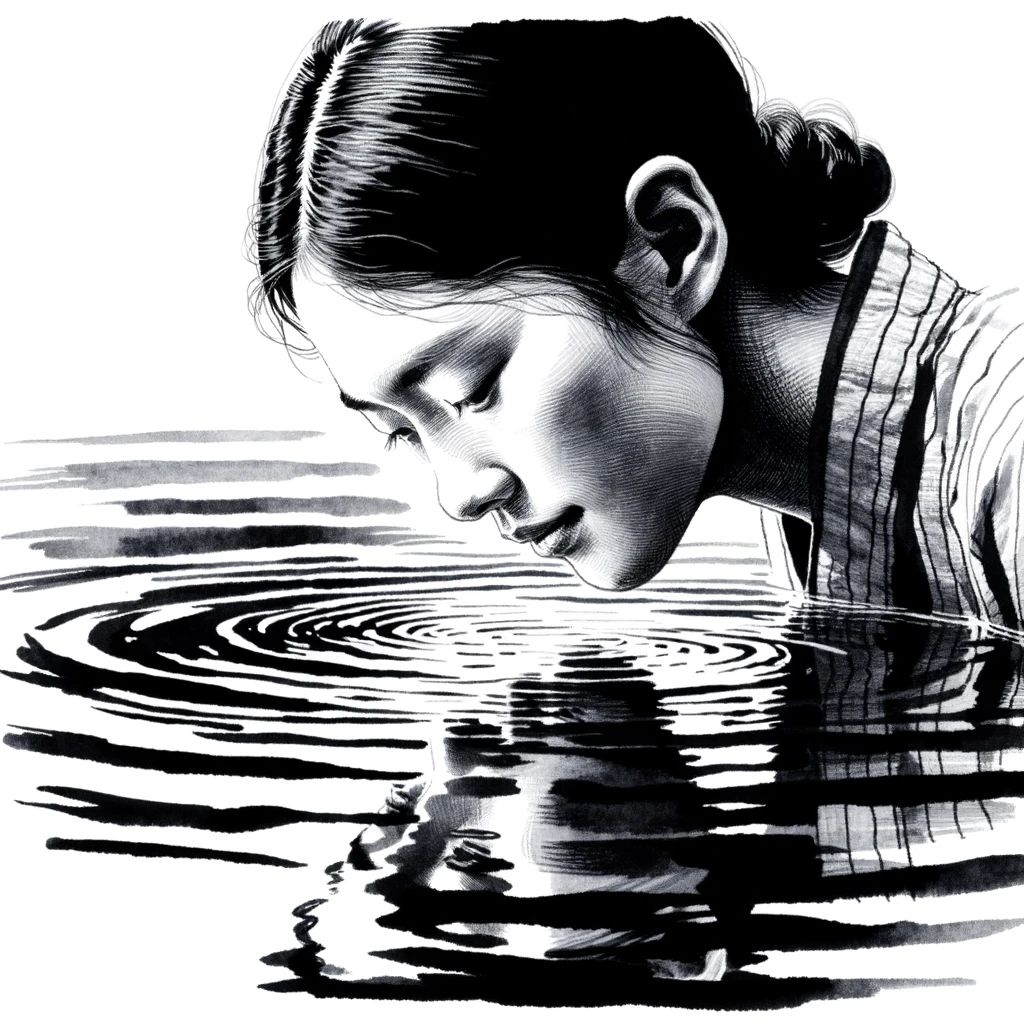
Young woman looking at her image reflecting in water,  DALL-E, 3.30.24

As I reclined on her back porch, the gentle hum of summer around me, my eyes were graced with the joyful sight of my grandchildren at play. Their laughter, pure and unburdened, danced through the air, a reminder of life’s simplest yet profound joys. Turning to my daughter, a reflection of both the past and the promise of tomorrow, I remarked on her unwavering sense of self. “You are always yourself,” I said, a smile curving my lips. Without missing a beat, she responded, “I don’t know any other way to be.”

That moment, brief as it was, unfurled a tapestry of memories within me. I used to say that when I was younger, a declaration of my essence. I wondered, did she echo my words, or had she, too, found this path on her own? I hoped it was both. More so, I hoped she had absorbed, through osmosis of spirit and observation, the importance of authenticity. It struck me then, as I watched the next generation carve their paths, “You can’t always know what you believe. But you can be your authentic self.”

Defining Authenticity

Authenticity – it’s a term that resonates with the soul. Its roots lie in the Greek word “authentikos,” which means ‘original’ or ‘genuine.’ But authenticity is more than just originality; it’s the courage to be true to one’s self, beliefs, and emotions, despite the external pressures to conform. It’s the essence of being that remains constant amidst the ever-changing landscapes of our lives.

A Tribal Tale of Truth

There’s an ingenious story from an ancient tribe that has been passed down through generations about the value of authenticity. The tale speaks of a young warrior who sought the counsel of the village elder, troubled by the masks he saw his peers wearing – masks of bravery, wisdom, and strength that hid their true selves. The elder, known for his unwavering authenticity, led the warrior to a still pond and asked him to look at his reflection.

“See your face, how it changes with the water’s flow, yet beneath remains the same,” he said. “Like the water, life will demand different versions of you, but what lies beneath must always be your true self.”

This story, rich in wisdom, underscores the power of authenticity. It teaches us that while life’s circumstances might require us to adapt, our core – our authentic self – should remain unaltered.

Five Characteristics of Authenticity

  1. Self-Awareness: Being authentic starts with knowing who you are – your values, desires, and dreams. It’s a deep, introspective journey that allows you to live in alignment with your true self.
  2. Transparency: Authentic individuals are open and transparent about their thoughts and feelings. They don’t hide behind facades but express themselves honestly and sincerely.
  3. Consistency: Authenticity means being the same person in all areas of life. It’s a consistency of character that builds trust and fosters genuine relationships.
  4. Courage: It takes courage to be authentic in a world that often rewards conformity. Authentic individuals are brave enough to stand out, to be different, and to follow their path.
  5. Compassion: Authenticity is rooted in compassion – for oneself and others. It acknowledges our shared humanity, celebrating our imperfections and vulnerabilities.

The Authentic Path

As I ponder my daughter’s unwavering sense of self, I’m reminded of the importance of nurturing authenticity in our lives. It’s a journey that starts with introspection, demands courage, and is sustained by a commitment to living our truth. Authenticity is the key to not just knowing but embracing who we are. It’s about shedding the masks we wear and stepping into the light of our genuine selves. In doing so, we not only enrich our own lives but become beacons for others, guiding them toward the authenticity we all seek.

The Essence of Cherish: Understanding and Embracing its Value

In the fast-paced world we inhabit, the essence of cherishing seems more relevant than ever. The word “cherish” is a verb that conveys a depth of emotional investment far beyond simple care or love. To cherish something or someone is to hold them dear, to treat them with affection and care, and to protect and preserve them with enthusiasm. It’s a word that encompasses but with an added layer of active and ongoing commitment and appreciation.

The Origins of Cherish

The word “cherish” finds its roots in the Old French word “cherir,” which comes from “cher,” meaning dear. This, in turn, is derived from the Latin “carus,” meaning beloved or dear. The transition of the word through languages mirrors the evolution of the concept it represents, expanding from a term of endearment to an active verb signifying the act of holding something dear and nurturing it with love and attention.

What We Can Learn from Cherish

Cherishing is not a passive state but an active process. It teaches us the importance of appreciation, care, and protection. In cherishing, we learn to value not just the significant, monumental aspects of life but also the quiet, everyday moments and entities that bring joy, comfort, and meaning to our lives. The act of cherishing encourages us to slow down, recognize, and nurture what truly matters, fostering a deeper connection and sense of gratitude towards our surroundings and relationships.

Ten Things We Should Cherish and Why

  1. Family and Friends: The bedrock of emotional support and love, cherishing these relationships can lead to a more fulfilling and happier life.
  2. Health: Often taken for granted until it’s compromised, our health enables us to live, experience, and enjoy life to its fullest.
  3. Time: An irreplaceable resource, time should be cherished and used wisely, reminding us to live meaningfully.
  4. Nature: Cherishing the environment nurtures a sense of responsibility towards its preservation for future generations and fosters a connection with the earth.
  5. Memories: Preserving and cherishing memories connects us to our past, shapes our identity, and guides our future.
  6. Peace: In a world where turmoil can be rampant, cherishing moments of peace encourages mindfulness and gratitude.
  7. Creativity: The ability to create and appreciate creativity in all forms enriches our lives and cultures, fostering innovation and emotional expression.
  8. Knowledge: Cherishing the pursuit of knowledge leads to growth, understanding, and progress, both personally and societally.
  9. Freedom: Often undervalued, freedom in all its forms allows for self-expression, choice, and the pursuit of happiness.
  10. Love: The foundation of human connection, cherishing love in all its forms builds empathy, unity, and compassion.

In cherishing these aspects of life, we not only enhance our own existence but also contribute positively to the world around us. Cherishing is an art that, when practiced, can transform the mundane into the extraordinary, reminding us of the beauty, value, and impermanence of all we hold dear. By integrating the act of cherishing into our daily lives, we can lead more intentional, connected, and joyful lives.

Finding Comfort in the Eternal Spirit of Life

As I sit back in my recliner, I think of a friend who sits in an ICU waiting room. My mind wanders back to the countless hours I spent in the sterile, tension-filled air of ICU waiting rooms. There, amidst the soft snores and restless shuffling of family members clinging to hope and dread in equal measure, I’ve witnessed the entire spectrum of human emotion. The moment a doctor steps into the room, the atmosphere tenses; a good report sends waves of hope cascading through the room, while bad news casts a shadow of despair. And then, there are moments when grief crashes into us unannounced, with the utterance of devastating words: “I’m sorry, she didn’t make it.” In those moments, the reality of mortality, the finite nature of the human body, becomes inescapably clear. The body dies, leaving behind a palpable void.

This is where I’d step in to be close to the family, not set apart to be a doctor of medicine, but set apart to be a doctor of ministry. Not to speak but to be a symbol representing Immortality’s presence. The presence of an ordained minister served as a reminder that Life, the Eternal Spirit of Life, remains undiminished. In the face of overwhelming grief, I didn’t “preach” the immortality of the soul; I simply stood and prayed with the family as a representative of the ever-present Life Force that lives in the shell of mortal bodies. Even when the breath of Life seems extinguished, Life surrounds us, unyielding and perpetual.

For those of you reading this, skeptical of the Immortal Spirit of Life, I invite you to pause and reflect with me. Consider the simple, yet profound act of holding a palm full of wildflower seeds. Have you ever held a palm full of wildflower flower seeds? I have. They are as tiny as a grain of salt. I’ve planted them, watched as Life courageously broke through the soil, and marveled as they bloomed into vibrant flowers.

Do you think the seed knows that it will become a flower?

My faith in the Immortal Spirit of Life is rooted in these everyday miracles. From the majestic oak trees to the delicate roses, Life’s resilience is undeniable. If this Eternal Spirit can spring from the seeds of plants, how can we doubt its presence within us, the mortal human body? The fact that humans have rational minds and self-awareness does not change the reality that Life animates the mortal body.

As an ordained minister set apart to represent Eternal Life, I proclaim that Life springs forth even after death. Death is not an end but a transformation, a moment when the mortal body yields to a new beginning. This conviction is not just an abstract belief; it’s a truth I’ve witnessed with my eyes, understood with my mind, and felt deeply within my being.

For those sitting in the shadow of “Death,” let this be your solace: “Life” lives on. It’s all around you, in every expression of Life. The Spirit of Life dwells within us. In our mortal forms, we are mere seeds of Life, and when our time comes, we do not simply fade away; we give way to new Life.

In the words of Paul from the New Testament, which beautifully encapsulate this truth:

“So will it be with the resurrection of the dead. The body that is sown is perishable, it is raised imperishable; it is sown in dishonor, it is raised in glory; it is sown in weakness, it is raised in power; it is sown a natural body, it is raised a spiritual body. If there is a natural body, there is also a spiritual body.” – 1 Corinthians 15:42-44 (NIV)

This passage eloquently speaks to the transformation from mortality to immortality, from seed to Life anew. In the Eternal Spirit of Life, we find not just the promise of continuity but the profound assurance of renewal and hope.

Rediscovering the Honor Code: A Lesson from the Citadel


Photo by Pixabay on Pexels.com

During a memorable visit to a volleyball tournament where my daughter competed, held at the prestigious Citadel in Charleston—a renowned military school—a simple yet profound incident unfolded that left a lasting impression on me. As I made my way into the gym, my eyes caught sight of a five-dollar bill resting on the ground. Believing it to be a stroke of luck, I bent down to pick it up, only to be interrupted by a voice claiming, “That’s mine, sir.” My initial reaction was disbelief, assuming it to be a jest. I replied with a casual, “Sure,” only to be met with a serious demeanor from the young military student who explained, “Seriously, we have the honor code here, and I don’t have pockets, so I just laid it down on the ground.”

This moment of clarity came as I observed the two young men engaging in a game of catch with their lacrosse sticks, realizing the five-dollar bill was intentionally placed on the ground as a makeshift solution while they practiced. This encounter serves as a poignant reflection on the concept of the honor code, a principle seemingly fading from the collective conscience of modern American society.

Honor and the Honor Code Explained

Honor is a multifaceted concept that encompasses integrity, respect, and a steadfast adherence to ethical principles. The honor code, a manifestation of these values, is a commitment to honesty, fairness, and accountability in one’s actions. It’s a pledge that one’s word is as binding as one’s signature, a testament to one’s character and trustworthiness.

The Erosion of Honor in Contemporary Society

Unfortunately, the observance of the honor code is becoming an exception rather than the norm. Examples abound of broken promises, where individuals’ words no longer hold the weight of their vow. Friendship, once considered an unbreakable bond, now often fails the test of reliability in times of need. Respect for elders, a fundamental tenet of societal cohesion, is diminishing, with younger generations frequently overlooking the value and wisdom of their elderly parents.

Charting a Path Back to Honor

To reverse this trend and reintegrate the honor code into our daily lives, we must undertake deliberate actions:

  1. Cultivate Personal Integrity: Begin with self-reflection and a commitment to personal growth. Integrity should be the cornerstone of our actions, ensuring that our words and deeds are in alignment with our ethical principles.
  2. Foster Trust and Respect in Relationships: Rebuild the foundation of our relationships on trust and respect. This involves being dependable, keeping our promises, and showing unwavering support for our friends and family in their times of need.
  3. Honor Our Elders: Revive the tradition of respecting and valuing the elderly. This includes listening to their wisdom, learning from their experiences, and providing them with the care and respect they deserve.

Through this volleyball tournament experience at the Citadel, I was reminded of the profound significance of the honor code. It’s a clarion call for us to embody these timeless values, ensuring they guide our interactions and decisions. By doing so, we can cultivate a society where honor is not just an ideal, but a lived reality.


The Enigma of Eternal Damnation: A Tapestry of Beliefs and Personal Reflections

In the shadowy corridors of theological discourse and the colorful tapestry of global religious beliefs, the concept of hell – a realm of eternal damnation – stands as a poignant symbol of ultimate spiritual consequence. This place, or state of being, described in myriad ways across different cultures and religions, has fascinated, terrified, and puzzled humanity for centuries. Let’s embark on a journey through the diverse landscapes of belief to understand the multifaceted views on hell, before I share a personal reflection on what hell signifies to me.

Image create by DALL-E, 2/4/24.

Hell Through the Prism of World Religions

Christianity: Traditionally, Christianity portrays hell as a place of eternal fire, a realm of perpetual punishment for the wicked and unrepentant souls who have turned away from God. This depiction varies among denominations, with some viewing hell more as a state of separation from God’s presence rather than a physical place of torment.

Islam: In Islam, Jahannam (hell) is described with vivid imagery in the Quran as a blazing fire, a place of punishment for those who deny Allah and lead a life of sin. It is depicted as a place of both physical and spiritual suffering, intended for purification and as a consequence of one’s deeds on earth.

Buddhism: Rather than an eternal hell, Buddhism speaks of Naraka, a place of torment where beings are reborn due to their karma. It is not eternal; beings suffer here for a period determined by their actions, until they are reborn again, offering a path towards eventual liberation through enlightenment.

Hinduism: Similar to Buddhism, Hinduism sees Naraka as a temporary place of suffering, aligned with the law of karma. It is a realm where souls are purified of their sins through suffering, before moving on to another rebirth, ultimately aiming for liberation (moksha) from the cycle of birth and death.

A Personal Reflection: Hell as the Absence of Pure Love

Venturing beyond the traditional frameworks, I’ve come to perceive hell in a metaphysical sense, transcending the physical depictions and dogmatic fears. To me, hell is not so much a place as it is a state – a total separation from pure love. Pure love, in its essence, is the very fabric of connection, understanding, and compassion that binds the universe and every soul within it.

Imagine, then, a spirit that lives in complete isolation from this love – not by fate or divine decree, but by choice. A spirit that chooses hatred over love, indifference over compassion, and isolation over connection. Such a spirit, I believe, faces a spiritual death, a ceasing to exist that is far more profound than any physical end. This is not an eternal punishment inflicted by a deity but a natural end to a path walked away from love.

The Ultimate Choice and Its Consequences

The concept of hell, across religions, serves as a cautionary tale about the consequences of our choices and actions. Whether seen as a place of fire and brimstone, a realm of temporary purification, or a metaphorical state of separation from love, the underlying message is clear: our choices have spiritual consequences.

In my reflections, the ultimate tragedy is a spirit that fades not because it was condemned to do so, but because it chose a path devoid of love. In this view, hell is not a punishment imposed from without but a state we navigate towards or away from, based on our actions and choices in life.

Conclusion: Embracing Love, Evading Hell

In pondering the enigma of hell, we are reminded of the power of love as a force of connection and salvation. Regardless of the diverse religious interpretations, the common thread is the transformative power of our choices and the paths they lead us on. By choosing love, compassion, and connection, we not only evade the spiritual desolation that might be considered hell but also enrich our lives and the lives of those around us with the purest form of existence.

Embracing the Grand Role: The Art of Being a Grandparent Through the Lens of Child Development Theories

In the grand tapestry of life, becoming a grandparent unveils a vibrant new thread, rich with responsibilities and opportunities. It’s a role that holds the potential for profound influence, an opportunity to shape a young life through love, wisdom, and guidance. Drawing upon child development theories, let’s delve into how you, as a grandparent, can navigate this unique relationship, ensuring it’s as enriching for you as it is for your grandchild

Image of a grandfather playing on the floor with grandson created by DALL-E on 2/2/2024.

Understanding Through Erikson’s Eyes

Erik Erikson’s stages of psychosocial development give us a fascinating lens through which to view our role as grandparents. In the early stages, children grapple with fundamental questions around trust, autonomy, and initiative. As grandparents, we’re uniquely positioned to reinforce the positive outcomes of these stages. By offering a safe space, filled with unconditional love and support, we encourage the development of trust. Through patience and encouragement, we can foster a sense of autonomy and initiative, cheering them on as they explore and learn about their world.

The Piaget Perspective: Encouraging Cognitive Development

Jean Piaget’s theory of cognitive development reminds us of the importance of stimulating a child’s intellectual growth. Engage with your grandchildren in play that challenges their cognitive abilities appropriate to their developmental stage. Whether it’s through simple sorting games with toddlers to encourage their understanding of categories or exploring cause and effect with preschoolers through building blocks, your involvement can be both fun and intellectually stimulating.

Vygotsky’s Social Development Theory: The Role of the More Knowledgeable Other

Lev Vygotsky introduced the idea of the “More Knowledgeable Other” (MKO), emphasizing the importance of social interaction in learning. Grandparents are natural MKOs, with a lifetime of knowledge and experience to share. Engage in joint activities, from cooking to gardening, where learning is a shared experience. Offer guidance, but also allow them to lead, exploring and discovering in their own ways. This scaffolding approach enables children to achieve tasks they might not be able to do alone, promoting higher levels of learning and development.

Attachment Theory: Building Secure Bonds

The Attachment Theory, pioneered by John Bowlby, highlights the importance of forming secure attachments in early childhood. As a grandparent, you have the opportunity to be a source of comfort and security for your grandchild. Be consistent in your affections and responses to them. This consistency helps foster a sense of safety and security, which is crucial for their emotional development.

Opportunities and Responsibilities

Embracing your role as a grandparent means recognizing the unique opportunities and responsibilities it entails:

  1. Be a source of unconditional love and support. Your relationship with your grandchild is less about discipline and more about providing a foundation of love and acceptance.
  2. Share your stories and wisdom. You have a wealth of experiences. Sharing these stories can help your grandchild connect with their heritage and learn valuable life lessons.
  3. Encourage exploration and curiosity. Support their interests, even if they’re different from your own. Encouragement from a grandparent can boost a child’s confidence and curiosity.
  4. Be present. In a world where everyone is busy, your time and undivided attention can make a world of difference.

The Grand Conclusion

Being a grandparent is an art form, influenced by love, shaped by wisdom, and guided by the desire to see your grandchild thrive. It’s about being a stable force in their lives, offering the kind of support that fosters growth, resilience, and a deep sense of belonging. Through the lens of child development theories, we see that our role is not just about spoiling them with treats (though that’s a fun part of it), but about nurturing their development into well-rounded, confident individuals. So, embrace this grand role with all its responsibilities and opportunities, for in doing so, you’re not just enriching the life of your grandchild, but you’re also crafting a legacy of love and wisdom that will echo through generations.