Untangling the Threads of Holy War in Israel: A Timeless Perspective

The turmoil unfolding in Israel, often deemed a ‘Holy War’, is an intricate tapestry of faith, history, and indomitable spirits clashing under the Middle Eastern sun.

What is a Holy War?

A Holy War is a conflict ignited and fueled by religious differences, often bearing the weighty expectation of divine favor on one’s side. It’s a battle where theology dons the armor, wields the sword, and strides onto a field soaked with the tears of history and the blood of the faithful.

Origin of the Holy War in Israel

The roots of the Holy War in Israel sink deep into the sands of time, intertwining with the tales of Abraham, the patriarch revered by Judaism, Christianity, and Islam alike. The conflict essentially begins with the divergent claims and spiritual attachments to the land considered holy by these three major monotheistic religions.
A Whisper from Jesus

Christ’s teachings, epitomized by love, forgiveness, and understanding, echo softly through the corridors of time. “Love your neighbor as yourself,” he would likely whisper, encouraging empathy, coexistence, and respect amongst the diverse inhabitants of the land. Jesus would probably advocate for peace, urging parties to lay down their arms, open their hearts, and engage in dialogue built on mutual respect and acknowledgment of each other’s rights and connections to the land.

Muhammad’s Perspective

Prophet Muhammad, the messenger of Islam, promoted justice, compassion, and respect for religious freedom. He would possibly urge Muslims to protect the rights of their Jewish and Christian neighbors and engage in peaceful negotiations. The Prophet might underscore the Quranic verse: “O mankind, indeed We have created you from male and female and made you peoples and tribes that you may know one another.” (49:13)

Moses’ Wisdom

Moses, the prophet of Judaism, might direct his followers to adhere to the commandments, especially “You shall not murder.” He might call for justice, righteousness, and respect for all individuals, irrespective of their faith, echoing the timeless wisdom embedded within the Torah.

Father Abraham’s Counsel

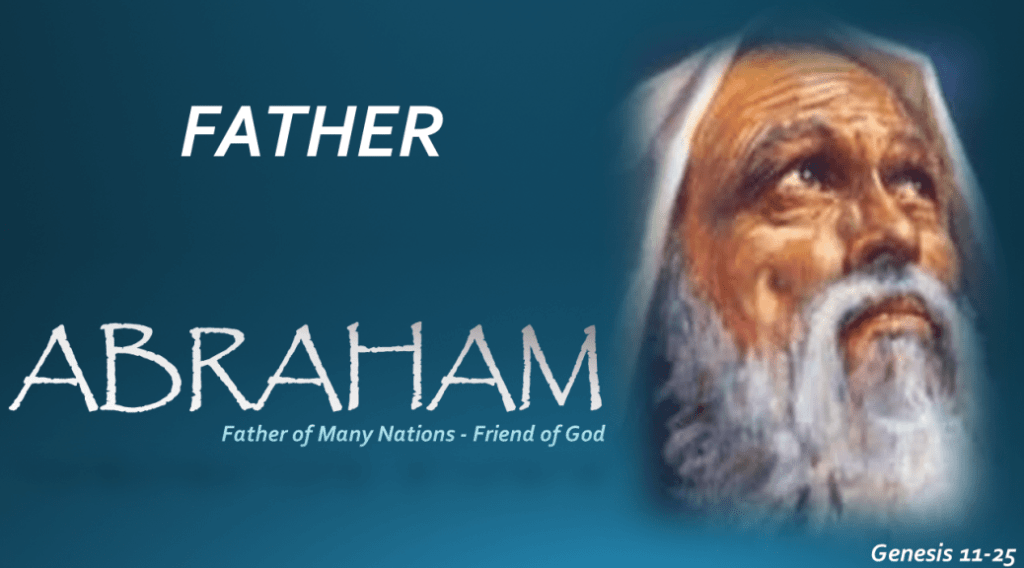
Abraham, the shared patriarch, would possibly be grieved seeing his descendants entangled in a spiral of conflict. He might advise recognizing the shared lineage and spiritual heritage, urging his children to embrace peace, respect, and cooperation as the cornerstones for building a harmonious future.

Seeking Resolution in Unity

In these voices from the past, we might find the whisperings of peace and reconciliation, the quiet nudging towards understanding and coexistence. For in the tapestry of Israel’s Holy War, perhaps it’s the threads of love, respect, and mutual acknowledgment that can weave a future where the divine isn’t called upon to sanction conflict, but to celebrate peace and unity amongst His creation.

Buy Me A Coffee

The Art of Binding: What Will You Carry With You?

This is a sermon for the lectionary reading for August 27, 2023: Matthew 16:13-20.

Good morning, my brothers and sisters in Christ. Today, we venture into the words of Matthew 16:13-20, where Jesus lays a cornerstone for the Church. He poses a question: “Who do you say that I am?” and then, gives us a profound insight: “Whatever you bind on earth will be bound in heaven.”

Who Is This Man?

The disciples had been with Jesus long enough to know He was no ordinary teacher. But it was Peter who boldly declared, “You are the Messiah, the Son of the living God.” Peter saw beyond the surface. He saw the love that Jesus embodied—a love so pure it could heal the sick, calm the storm, and even conquer death.

The Keys to the Kingdom

Jesus offers Peter the keys to the kingdom of heaven, the authority to bind and loose. This isn’t just a message to Peter. It’s a message to us, the Church. Frederick Buechner once wrote, “The place God calls you to is the place where your deep gladness and the world’s deep hunger meet.” Our gladness lies in our understanding of who Jesus is—the embodiment of divine love. It is that love we are called to bind and take with us.

What Are We Binding?

Paul Tillich, the German theologian, said, “The first duty of love is to listen.” When we listen to the cries of the world, we understand what we ought to bind. We live in a world consumed by materialism, by a pursuit of earthly things. Yet Paul writes in 1 Corinthians 13: “And now these three remain: faith, hope, and love. But the greatest of these is love.”

Why would Paul say love is the greatest?

The Weight of Love and Materialism: A Tale of Two Kings

Consider King Solomon, a man of unparalleled wisdom and immeasurable wealth. He had everything a person could desire, yet he declared it all meaningless. Now think of David, a king after God’s own heart. When he could have killed Saul, he chose love and mercy.

Solomon bound up wealth, wisdom, but found it meaningless. David bound up love and became a man after God’s own heart.

What Will We See in Heaven?

Plato once said, “At the touch of love, everyone becomes a poet.” Imagine then, what heaven would be like, filled not with the stuff we’ve accumulated, but the love we’ve gathered and given away. If you bind up stuff, you’ll see a lot of stuff to look at in heaven. That might be okay for some. A lot of people, including the institutional Christian Church, enjoy accumulating stuff.

The Final Binding: Love

And so we return to the profound words of Jesus. As the Church, we hold the keys. What will we bind on earth to carry with us to heaven? The Messiah’s first message to us is a question of discernment: Wealth or Love?

Friends, as I stand before you, I must confess—I can never get enough love. And in a world so starved for authentic love, can any of us say we’ve had our fill? Would we not all wish for a heaven saturated in eternal love?

Conclusion

Paul gives us a list: faith, hope, and love. But the greatest is love. Let us then live and bind love—on earth as it is in heaven. For the greatest treasure you’ll ever hold, or behold, is a heaven rich in eternal love.

That sounds like a good, peaceful, resting place to me.


Buy Me A Coffee