
Practicing Forgiveness

Image created by DALL-E, 5.17.24

“Then Peter came to Jesus and asked, ‘Lord, how many times shall I forgive my brother or sister who sins against me? Up to seven times?’ Jesus answered, ‘I tell you, not seven times, but seventy-seven times.'” – Matthew 18:21-22

The Importance of Forgiveness

In the context of Matthew 18, where Peter poses his question about forgiveness, the setting is part of Jesus’ ongoing teaching to His disciples. Prior to Peter’s inquiry, Jesus had been teaching them about the importance of humility, how to deal with sin in the community, and the parable of the lost sheep, which emphasizes God’s concern for the wayward and the value of every individual.

Peter’s question about forgiveness likely stems from this broader discussion of community relations and dealing with sin among believers. The discourse would have naturally led Peter to wonder about the limits of forgiveness, especially in a close-knit community where interpersonal offenses could frequently occur. His query reflects a practical concern about how often one should extend forgiveness to someone who repeatedly sins against them.

Parable of the Unforgiving Servant

Jesus responds with the parable of the unforgiving servant, which immediately follows His advice to forgive “seventy-seven times,” further emphasizing the necessity of unlimited forgiveness.

Jesus told the Parable of the Unforgiving Servant. In this parable, a king wanted to settle accounts with his servant. One servant owed him an enormous sum, equivalent to millions of dollars today, and couldn’t pay. The king ordered that the servant, along with his family and possessions, be sold to repay the debt. The servant begged for mercy, and the king, moved by compassion, forgave the debt entirely.

However, this same servant went out and found a fellow servant who owed him a much smaller amount. Instead of showing the same mercy he had received, he demanded immediate payment and had the fellow servant thrown into prison. When the other servants saw what had happened, they were greatly distressed and told the king. The king called the unforgiving servant in and rebuked him, saying, “Shouldn’t you have had mercy on your fellow servant just as I had on you?” In anger, the king handed him over to the jailers to be tortured until he could pay back all he owed.

Jesus used this parable to show the importance of extending the same forgiveness we receive from God to others. This teaching illustrates that forgiveness should be extended generously, mirroring God’s forgiveness towards humanity, and highlights the consequences of failing to forgive others from the heart. This exchange between Peter and Jesus underscores a key aspect of Christian doctrine, emphasizing forgiveness as a fundamental expectation within the community, reflecting God’s infinite mercy and grace.

And forgive us of our trespasses, as we forgive those who trespass against us.

Lord’s Prayer

Forgiveness, in its essence, is a resurrection. It is a journey from the bondage of anger and resentment to the freedom of peace and understanding. It is the conscious choice to move beyond the pain inflicted by others or by our own mistakes. Without forgiveness, we are shackled to the past, unable to embrace the present or future fully. It is the key to healing, to mending the invisible scars that weigh down our spirits. By forgiving, we acknowledge our shared humanity, recognizing that we all falter and that grace is a gift we both give and receive.

Steps to Forgive Yourself and Others

Forgiving is an intentional act, a process that begins with a decision and unfolds with effort and patience. Here are steps to guide you on this path:

  1. Acknowledge the Hurt: Begin by acknowledging the pain. Whether it’s something someone else did to you or a mistake you made yourself, it’s important to confront it honestly. Name the hurt, understand its impact on you, and allow yourself to feel the emotions it brings up.
  2. Release the Grudge: Let go of the desire for revenge or retribution. This doesn’t mean you condone the behavior, but you choose not to let it control your emotions and actions. Say to yourself, “I release this pain. I release this grudge.”
  3. Empathize: Try to see the situation from the other person’s perspective. Understanding their motives or circumstances can help in softening your heart. This step is crucial when forgiving yourself as well—recognize the pressures and challenges you were under at the time.
  4. Decide to Forgive: Make the conscious decision to forgive. This might be the hardest part, but it’s also the most liberating. Affirm your choice to let go and move on.
  5. Take Action: Sometimes forgiveness requires action. It might be writing a letter (whether you send it or not), having a conversation, or simply performing a ritual of release. Do whatever feels right to you to symbolize your commitment to forgiveness.

How Forgiveness Heals

Forgiveness is a powerful healer. When we let go of anger and resentment, we make room for positive emotions and experiences. The act of forgiving releases us from the chains of the past, allowing us to live more fully in the present. It reduces stress, improves our mental health, and fosters better relationships. Forgiveness is not just an emotional release but a physical one, too. Studies have shown that people who forgive experience lower blood pressure, reduced risk of heart disease, and stronger immune systems. In essence, forgiveness is a holistic healer, mending our hearts, minds, and bodies.

Letting Go of Grudges

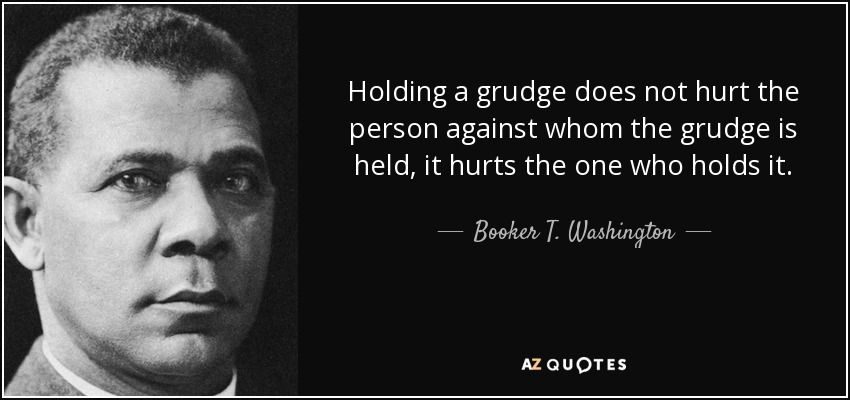
Grudges are like heavy stones we carry around, weighing us down and draining our energy. Letting go of a grudge is a gift to ourselves. It means freeing ourselves from the negative hold the past has on us. To let go, start by recognizing the grudge’s impact on your life. Ask yourself if holding onto it is worth the emotional and physical toll it takes.

Next, choose to release it. This is an active choice, a decision to no longer allow the past to dictate your present. Engage in practices that help you let go, such as journaling, meditation, or speaking with a trusted friend or therapist. Visualize the grudge as a physical object, and imagine yourself setting it down and walking away from it.

In the end, letting go of grudges opens the door to peace and joy. It is a declaration that we will not be defined by our pain but by our capacity to heal and to love. It’s a journey worth taking, one step at a time.

Finding Comfort in the Eternal Spirit of Life

As I sit back in my recliner, I think of a friend who sits in an ICU waiting room. My mind wanders back to the countless hours I spent in the sterile, tension-filled air of ICU waiting rooms. There, amidst the soft snores and restless shuffling of family members clinging to hope and dread in equal measure, I’ve witnessed the entire spectrum of human emotion. The moment a doctor steps into the room, the atmosphere tenses; a good report sends waves of hope cascading through the room, while bad news casts a shadow of despair. And then, there are moments when grief crashes into us unannounced, with the utterance of devastating words: “I’m sorry, she didn’t make it.” In those moments, the reality of mortality, the finite nature of the human body, becomes inescapably clear. The body dies, leaving behind a palpable void.

This is where I’d step in to be close to the family, not set apart to be a doctor of medicine, but set apart to be a doctor of ministry. Not to speak but to be a symbol representing Immortality’s presence. The presence of an ordained minister served as a reminder that Life, the Eternal Spirit of Life, remains undiminished. In the face of overwhelming grief, I didn’t “preach” the immortality of the soul; I simply stood and prayed with the family as a representative of the ever-present Life Force that lives in the shell of mortal bodies. Even when the breath of Life seems extinguished, Life surrounds us, unyielding and perpetual.

For those of you reading this, skeptical of the Immortal Spirit of Life, I invite you to pause and reflect with me. Consider the simple, yet profound act of holding a palm full of wildflower seeds. Have you ever held a palm full of wildflower flower seeds? I have. They are as tiny as a grain of salt. I’ve planted them, watched as Life courageously broke through the soil, and marveled as they bloomed into vibrant flowers.

Do you think the seed knows that it will become a flower?

My faith in the Immortal Spirit of Life is rooted in these everyday miracles. From the majestic oak trees to the delicate roses, Life’s resilience is undeniable. If this Eternal Spirit can spring from the seeds of plants, how can we doubt its presence within us, the mortal human body? The fact that humans have rational minds and self-awareness does not change the reality that Life animates the mortal body.

As an ordained minister set apart to represent Eternal Life, I proclaim that Life springs forth even after death. Death is not an end but a transformation, a moment when the mortal body yields to a new beginning. This conviction is not just an abstract belief; it’s a truth I’ve witnessed with my eyes, understood with my mind, and felt deeply within my being.

For those sitting in the shadow of “Death,” let this be your solace: “Life” lives on. It’s all around you, in every expression of Life. The Spirit of Life dwells within us. In our mortal forms, we are mere seeds of Life, and when our time comes, we do not simply fade away; we give way to new Life.

In the words of Paul from the New Testament, which beautifully encapsulate this truth:

“So will it be with the resurrection of the dead. The body that is sown is perishable, it is raised imperishable; it is sown in dishonor, it is raised in glory; it is sown in weakness, it is raised in power; it is sown a natural body, it is raised a spiritual body. If there is a natural body, there is also a spiritual body.” – 1 Corinthians 15:42-44 (NIV)

This passage eloquently speaks to the transformation from mortality to immortality, from seed to Life anew. In the Eternal Spirit of Life, we find not just the promise of continuity but the profound assurance of renewal and hope.

Raised in the Heart of Fundamentalism: Five Personal Revelations on its Psychological Impacts

Growing up in the world of Fundamentalist Christianity was a unique experience, to say the least. The world around me was painted in black and white, with clear delineations between what was righteous and what was not. While I deeply appreciate the structure and values it instilled in me, I can’t help but reflect on some of the less-discussed, psychological repercussions that come with such a staunch belief system.

Here are five personal revelations about the impact of fundamentalism on my psyche and those around me:

  1. Cognitive Dissonance: Fundamentalism is a world of absolutes. As I grew older and began to encounter different worldviews, I felt torn. My heart said one thing, but the teachings of my youth said another. This tug-of-war inside my mind often left me feeling lost and confused, always questioning where I truly belonged.
  2. Anxiety and Fear: I remember nights lying awake, petrified at the thought of eternal damnation or the impending apocalypse. The fear wasn’t just about the hereafter; it was also about the everyday things, like the movies I watched, the music I listened to, or the friends I made outside the church. Every step felt like a potential misstep, leading me away from salvation.
  3. Limited Critical Thinking: Questioning was akin to rebelling. I was taught to accept, not to inquire. While this made for a straightforward and clear-cut worldview, it also meant that I struggled with critical thinking. Everything was seen through a singular lens, leaving little room for nuance or individual thought.
  4. Social Isolation: One of the hardest parts was feeling out of place. Our strict belief system often distanced us from ‘outsiders,’ making it challenging to form genuine connections with those who didn’t share our faith. This meant missing out on countless friendships, experiences, and perspectives.
  5. Depression from Suppressed Self-expression: There were moments when I felt like a bird trapped in a cage. There were so many things I wanted to say, do, and experience. But the weight of doctrine often held me back, leading to bouts of sadness and a feeling of being ‘stuck’.

Yet, with time and reflection, I’ve learned that faith is personal. It’s a journey, not a destination. Today, I strive to strike a balance, cherishing the values that resonate with me while also being open to growth, understanding, and change. It’s essential for us all to remember that faith can be a beautiful guiding force, but it’s the love, compassion, and open-mindedness we show to ourselves and others that truly reflects its spirit.

Buy Me A Coffee